
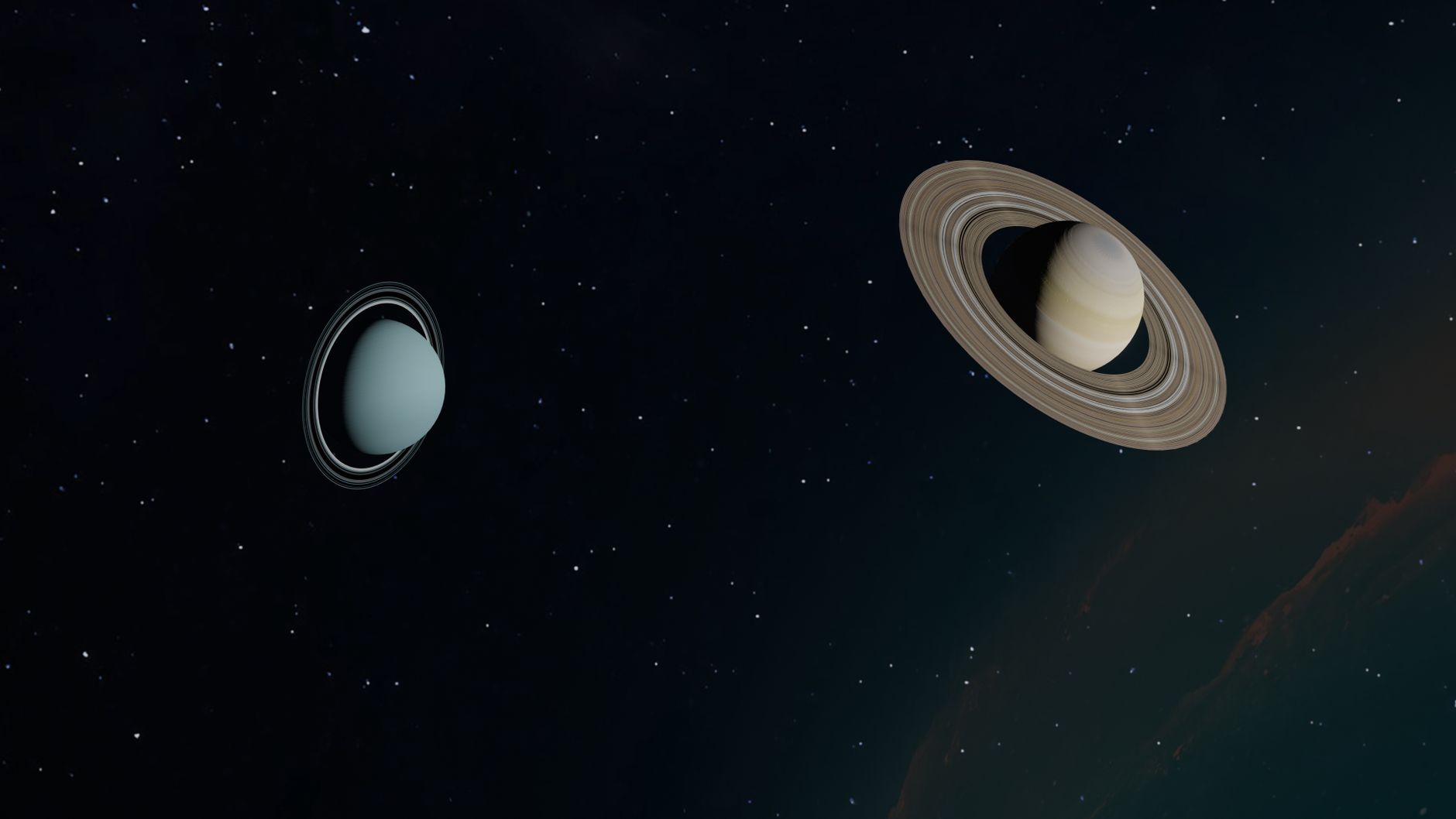
Uranus magnetic field has baffled scientists for 40 years. Recent research may finally shed light on the peculiarities of this distant planet’s magnetic behavior.
Understanding Uranus’ Magnetic Field
The magnetic field of Uranus has long puzzled scientists, presenting a unique challenge since its discovery over 40 years ago. Unlike the magnetic fields of other planets, Uranus’ magnetic field is tilted at an unusual angle and is offset from the planet’s center, leading to questions about its formation and behavior.
Recent studies suggest that the peculiarities of Uranus’ magnetic field may be linked to the planet’s internal structure and the dynamics of its icy atmosphere. Researchers believe that the complex interactions between the planet’s core and its surrounding materials contribute to this enigmatic magnetic field.
As scientists continue to investigate these phenomena, they hope to uncover more about the processes governing Uranus’ magnetic field, potentially shedding light on similar magnetic fields in other celestial bodies.
- Unique tilt: The magnetic field is tilted at about 59 degrees.
- Offset center: The field is not aligned with the planet’s rotation axis.
The History of Magnetic Field Studies
The study of Uranus’ magnetic field has a rich history, marked by numerous explorations and scientific inquiries. Since the discovery of Uranus in 1781, scientists have been fascinated by its unique characteristics, including its unusual magnetic field.
In 1986, the Voyager 2 spacecraft provided the first close-up observations, revealing that Uranus’ magnetic field is tilted significantly from its rotation axis. This unexpected orientation sparked a wave of research aimed at understanding its origins and implications.
Over the years, various theories have emerged, suggesting that the magnetic field may be influenced by the planet’s internal structure and the dynamics of its atmosphere. Recent advancements in computer modeling have enabled researchers to simulate these conditions more accurately, leading to new insights into the enigmatic nature of Uranus’ magnetic field.
As scientists continue to study this fascinating phenomenon, they hope to unravel the mystery that has perplexed them for over four decades.
Recent Discoveries About Uranus
Recent studies have shed new light on the enigmatic Uranus magnetic field, offering insights that could unravel its long-standing mysteries. Scientists have utilized advanced models and simulations to better understand the planet’s complex magnetic properties. Key findings include:
- Unexpected Orientation: The magnetic field of Uranus is tilted at an unusual angle, which has perplexed researchers for decades.
- Potential Interior Dynamics: New hypotheses suggest that the planet’s internal structure might play a significant role in the generation of its magnetic field.
- Comparison with Other Planets: By comparing Uranus with similar celestial bodies, scientists are beginning to see patterns that could explain its unique magnetic behavior.
These advancements mark a significant step toward a clearer understanding of the Uranus magnetic field and its implications for planetary science.
Why Uranus is Unique
Uranus is a planet that continues to intrigue scientists due to its unique characteristics, particularly its magnetic field. Unlike other planets in our solar system, Uranus has a tilted axis and an asymmetric magnetic field, which has puzzled researchers for decades. This peculiar orientation results in a magnetic field that is significantly offset from the planet’s center.
Several factors contribute to the uniqueness of Uranus:
- Extreme Tilt: Uranus rotates on its side, creating unusual magnetic interactions.
- Composition: The planet’s icy composition affects its magnetic dynamics.
- Magnetic Field Variability: The magnetic field exhibits irregularities not seen on other planets.
These features make the study of Uranus’ magnetic field essential for understanding not just the planet itself, but also the broader mechanics of planetary magnetism in our solar system.
Implications for Future Research
The peculiar characteristics of the Uranus magnetic field present intriguing implications for future research in planetary science. Understanding its unusual orientation and structure could shed light on not only Uranus but also other ice giants in our solar system. Scientists are now encouraged to explore further the magnetic interactions at play, which may reveal new insights into the internal dynamics of these distant planets.
Future missions could prioritize direct measurements of Uranus’ magnetic field, allowing for more comprehensive data collection. Such investigations could enhance our knowledge of planetary formation and evolution, particularly regarding the magnetic field’s role in atmospheric dynamics.
Additionally, studying Uranus could inspire comparative analyses with exoplanets, deepening our understanding of magnetic fields beyond our solar system. As researchers continue to unravel these mysteries, the Uranus magnetic field could significantly influence our comprehension of planetary science as a whole.
Comparing Uranus to Other Planets
When comparing Uranus’ magnetic field to those of other planets, significant differences emerge. While Earth has a magnetic field generated by its molten iron core, Uranus presents a unique challenge. Its magnetic field is tilted at an angle of approximately 59 degrees from its rotational axis and is offset from the planet’s center, which is unlike the more symmetrical fields of Earth and Jupiter.
Furthermore, Neptune, Uranus’ twin in size and composition, also exhibits a similarly unusual magnetic field. However, the mechanisms behind these anomalies remain poorly understood. Scientists believe that the icy and gaseous compositions of Uranus and Neptune lead to complex magnetic interactions.
Understanding the peculiarities of Uranus’ magnetic field may provide insight into the atmospheric dynamics of these ice giant planets and their potential for hosting unique magnetic phenomena.
Expert Opinions on the Findings
Experts in planetary science have weighed in on the recent findings regarding the Uranus magnetic field, which has puzzled researchers for decades. Dr. Emily Carter, a leading astrophysicist, stated, “The peculiar orientation of Uranus’ magnetic field suggests that its internal dynamics are far more complex than we previously thought.” She emphasized that understanding these dynamics is crucial for unraveling the planet’s formation history.
Another expert, Professor James Lin, noted the potential implications of these discoveries. “If we can decode the mysteries surrounding Uranus’ magnetic field, it may offer insights into the magnetic properties of other ice giants in our solar system,” he explained.
- Enhanced understanding of magnetic fields in celestial bodies
- Potential advancements in future planetary exploration missions
- New theories on planetary evolution and magnetic generation
These perspectives highlight the significance of ongoing research in this intriguing area of study.
The Uranus magnetic field presents a unique challenge for scientists due to its unusual tilt and asymmetry. Understanding the Uranus magnetic field can provide insights into the planet’s formation and evolution.
Photo by Zelch Csaba on Pexels